
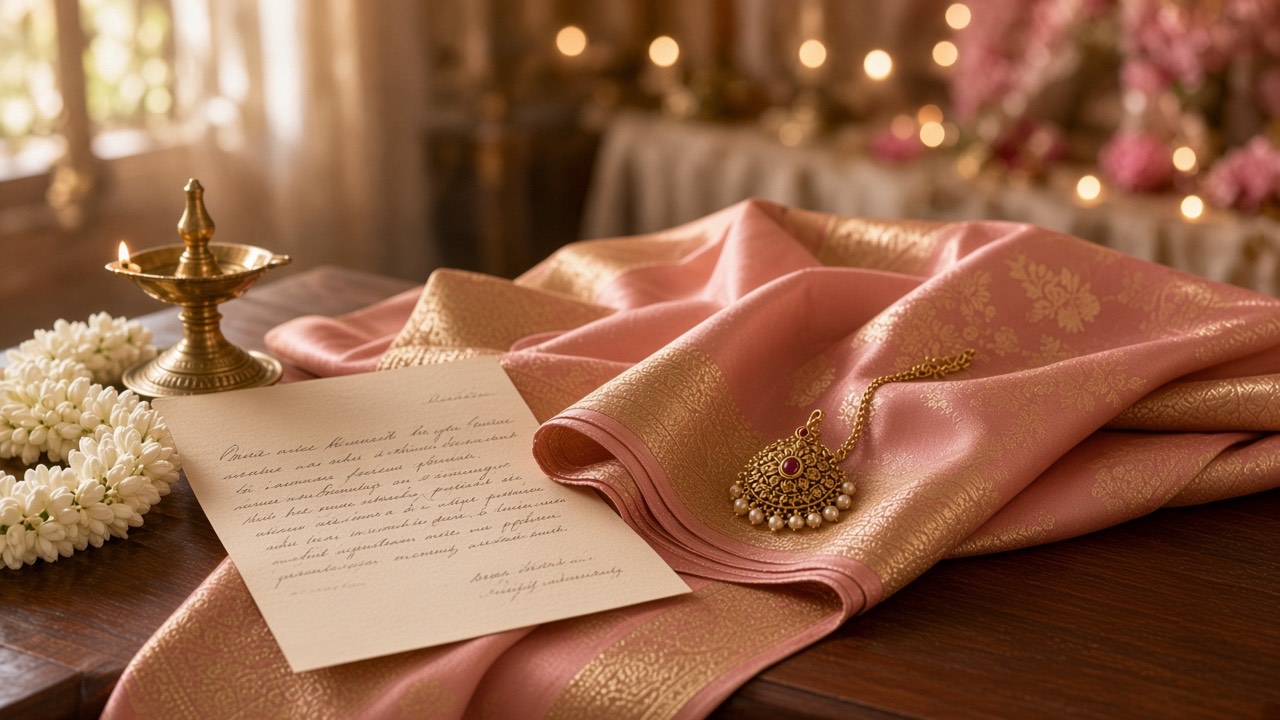
A saree box opens on the bed. Inside: silk folded carefully for years, a small pendant from a grandmother, a photograph that has moved house more than once. A daughter leans in — not only to ask what she will wear for her Half Saree Ceremony, but to hear why these things were kept.
That quieter conversation can outlast the decorations.
A Half Saree Ceremony is a South Indian coming-of-age milestone. Customs and names vary by family; some households speak of a puberty function instead. Beyond outfits and photographs, the day can create room for a mother and daughter to talk about growing up, confidence, and the women who came before them.
Start With Stories, Not Logistics
Outfits, guest lists, and menus will demand attention soon enough. Before they take over, offer context that cannot be ordered online.
Share what celebrations felt like at her age. Show photographs of her grandmother, aunts, or cousins. Explain which traditions your family holds close — and which ones changed. If the previous generation did not mark this milestone the same way, that story belongs too. Continuity is meaningful; honesty about change is also meaningful.
Those talks help her see the day as a chapter in a family story, not only a costume change.
If you are still shaping how personal the celebration feels, our guide to making her Half Saree celebration truly her own pairs well with this keepsake focus.
Let One Heirloom Carry Meaning
A keepsake grows stronger when its story is told. A grandmother’s bangle, a mother’s pendant, a scrap of silk worked into an accessory, or a family recipe served that day can connect generations.
It does not need to be rare or costly. A small object with a clear explanation often outweighs something bought only for the event. If an heirloom is too delicate to wear, photograph it with her or write its story into a memory book.
Write Something She Can Open Later
A letter is still one of the simplest keepsakes — and one of the most personal.
You might write what you admire in her now, what you hope she remembers about herself, and what you wish you had known at her age. Fathers, grandparents, siblings, or close relatives can add short notes too.
They do not have to be read aloud. Place them in a box to open after the ceremony — or years later at another milestone. The event becomes a bridge between who she is today and who she is becoming.
Capture Voices, Not Only Poses
Professional photographs matter. So do ordinary voices. Ask a grandmother for a one-minute blessing. Invite an aunt to share a funny story about you as a child. Record your daughter naming what she is excited about beforehand.
Hearing those voices later can matter more than a perfect pose.
A simple memory book — photographs, notes, a saved invitation, a fabric swatch, guest wishes — is enough. Choose one or two keepsakes that feel natural; this is not another production to manage.
Colour and stage ideas for the day itself live in our Half Saree Ceremony themes and decor guide.
Invite Her Into Decisions
A mother–daughter milestone should not be designed only around adult expectations. Let her make age-appropriate choices: a colour preference, a song, which photographs to display, how she wants to enter.
Listening says tradition can belong to her — something she participates in, not only something that happens around her.
Let the Invitation Join the Keepsakes
Years later, families often find an invitation in an album and remember the colours and anticipation of the day. Choosing Half Saree Ceremony Invitations that match the personality of the celebration gives you something worth saving beside photographs and letters.
Households that use different naming can select Puberty Function invitations so relatives recognise the occasion while the tone stays warm and respectful.
A Day That Keeps Unfolding
Perhaps the best keepsake is a small ritual she may continue: writing a letter, wearing one family piece, recording blessings, or repeating a mother–daughter photograph at later milestones.
The ceremony lasts a day. The relationship around it does not. With stories, listening, and a few meaningful objects, the milestone can mean something different at 13, 23, and 43.
Ready to save the first piece of the memory? Explore Half Saree Ceremony Invitations and leave more of the day for the conversations that cannot be automated.
Frequently Asked Questions
What are meaningful keepsakes for a Half Saree Ceremony?
Letters, an heirloom or symbolic piece of jewellery, recorded blessings, a memory book, a saved invitation, photographs, or a small object tied to a grandmother’s story all work. The strongest keepsakes are the ones whose meaning she can retell later — not only the most expensive ones.
How can a mother make the ceremony meaningful for her daughter?
Involve her in decisions that fit her age, explain family traditions in plain language, share stories from earlier generations, and protect a few private moments that are not about guests or cameras.
Does a Half Saree keepsake need to be traditional?
No. Personal value matters more than style. Traditional, modern, or mixed keepsakes can all hold meaning when the story behind them is clear.
How can grandparents be included in the memories?
They can share stories, write a note, record a blessing, explain an heirloom, or join a photograph or small family ritual. Adapt involvement for distance and health so participation stays warm, not stressful.