
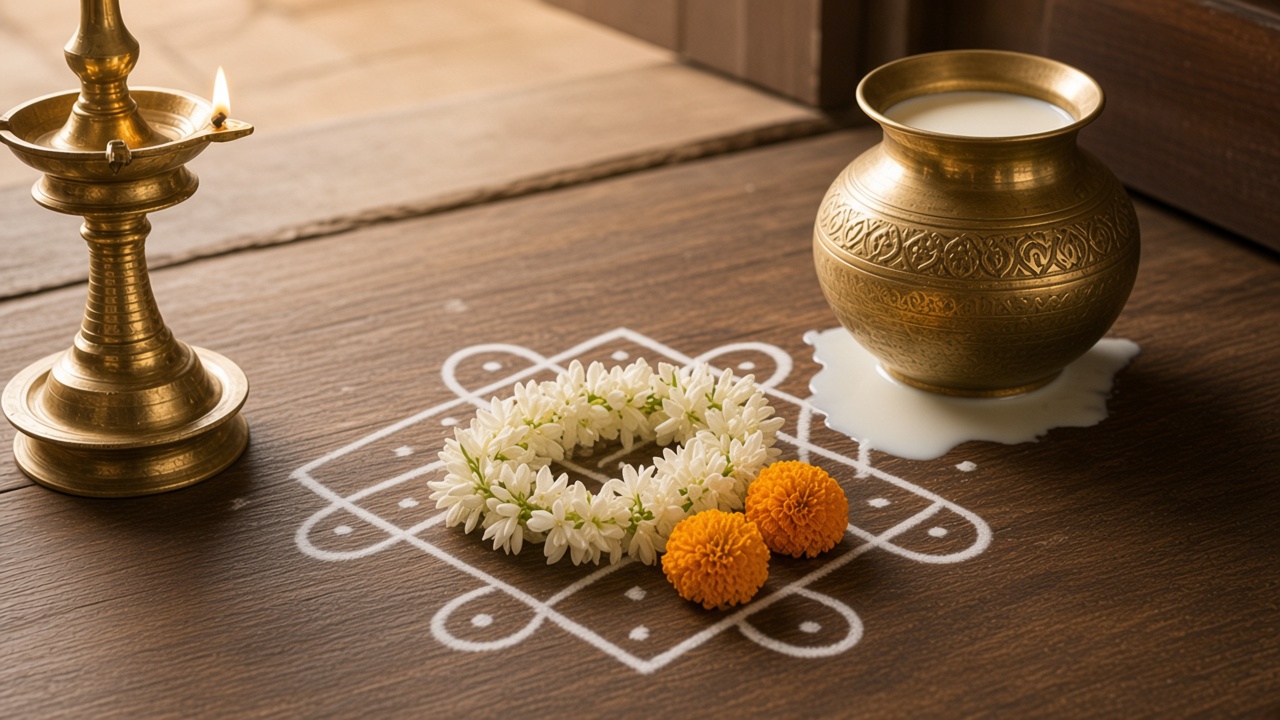
A new house is a set of keys, a new address, and a quiet feeling that life just got bigger. Before the furniture finds its place, many Indian families stop at the door on purpose. They enter once, together, and they ask for the home to be a good one.
That pause is the housewarming. Some families call the day a Gruhapravesam, and in many North Indian homes you will hear Griha Pravesh. The names differ. The reason is the same: the first time you cross that threshold should feel like a beginning, not an errand.
The first step is the ceremony
You have probably already walked through the house with the builder, the agent, or a measuring tape. The housewarming is a different kind of entry. It is the one you do with a priest or with the elders, at a time the family has chosen, with a lamp lit and people watching.
Families treat that step as the moment the house becomes theirs. Not on the day the papers were signed. On the day they asked the home to hold them well. If you want the feeling behind the rites before you plan the guest list, this is the part worth understanding. The practical order of the day is in how to plan a housewarming.
What the puja is asking for
The puja is not a performance for the guests. It is a short, serious conversation: let this house be peaceful, let the people in it stay well, let there be enough.
A priest may lead it. In some families an elder does. You will see a lamp, water, flowers, and a few things your household has always used. What matters is that someone who knows your home’s way of doing it is the person you ask. A list copied from another family will miss the one item your grandmother considers essential.
The blessings come right after. Elders put a hand on your head, or on the doorframe, and they say the thing out loud: may you be happy here. Guests who cannot travel can still be part of that if you tell them when it is happening. That is what housewarming invitations are for. They carry the time, the address, and the fact that this is the day you enter.
How South and North Indian homes mark it
The intention travels well. The picture in the kitchen does not.
In many South Indian homes, milk is boiled until it rises and spills over the pot. The overflow is the wish: may this house have more than enough. People watch for it. When the milk climbs the rim, the room relaxes. It is a small moment, and families remember it for years.
In many North Indian homes, the centre of the puja is a havan. A fire is lit, ghee and offerings go into it, and the prayers are said into that flame. The house is being cleared and claimed at the same time. Guests stand near enough to feel the heat and far enough to let the priest work.
You do not need both. You need the one your family actually does. If your parents are from different regions, ask them which doorway moment they want their grandchildren to recognise. Mixing every rite you have ever seen turns a clear morning into a long one, and the people you love most will spend it confused about when to stand and when to sit.
Families who use the word Gruhapravesam for that morning can send gruhapravesam invitations with the same designs. Put the name your guests already use on the first line, and the other name beside it if the room will include both sides of the family.
Then the house is allowed to be a house
Once the step is taken and the blessings are said, the day is allowed to become a gathering. Food, photographs, children running through rooms that still smell like paint. That part is its own joy, and it deserves its own thought: celebrating the new home with the people who matter.
The door is where it starts. Everything after that is you living there.
Ready to tell people when you will step inside? Choose housewarming invitations and send the day while the date is still the one you meant.