
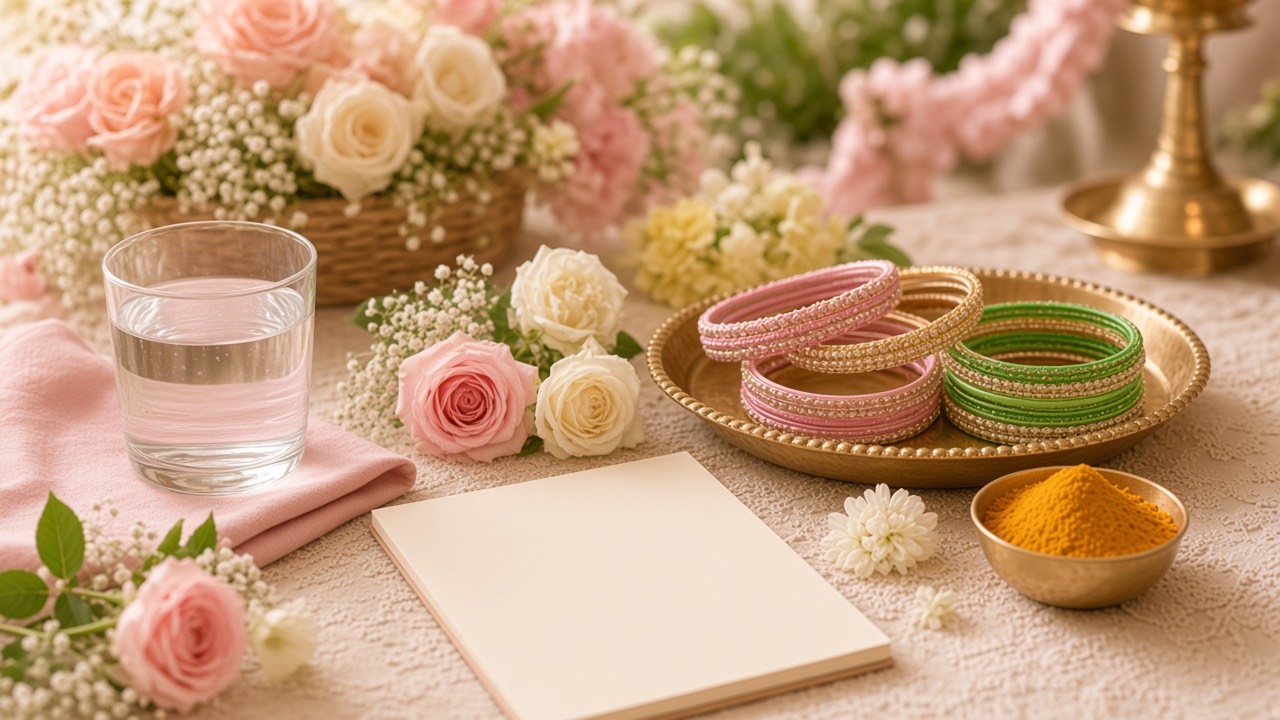
A grandmother settles a bangle on the mother-to-be’s wrist. An aunt notices she has not eaten. A sister refills a glass of water. Someone else quietly takes a task off her list.
None of that may appear in the event album. Yet it captures what Seemantham and Valaikappu can offer at their best: a woman approaching motherhood surrounded by people who intend to care for her.
Names and rites vary. Some families observe Seemantham and Valaikappu separately; others combine them or use one term for the larger day. If you want a clearer comparison of the traditions themselves, start with Seemantham vs Valaikappu. The emotional opportunity is steadier than any single ritual script — make her feel supported, not only celebrated.
Ask What Support Looks Like for Her
Families can pour so much energy into a beautiful plan that the person at the centre leaves exhausted. Pregnancy changes energy, appetite, mobility, and comfort week by week.
Before the schedule hardens, ask what would help. A shorter gathering? Planned breaks? Fewer photographs? Specific seating, food, or timing?
Listening is celebration. It says her wellbeing matters more than a perfect production.
Turn Advice Into Stories, Not Rules
Pregnancy attracts guidance — sometimes more than anyone asked for. Seemantham or Valaikappu can be a lovely moment for mothers, grandmothers, aunts, and friends to share wisdom, but tone matters.
Offer experience as story: “This helped me when you were born,” rather than a rulebook. Stories leave room for her to listen, ask, and choose. A small book of blessings and practical notes can hold those reflections if the tone stays encouraging, not evaluative.
Give Help That Continues After Guests Leave
Gifts are welcome. Ongoing help can mean as much: a meal schedule, an afternoon with an older child, an errand run, or a few planned check-ins after the baby arrives.
Relatives overseas can still participate — food delivery, regular calls, research help, or simply availability without demanding instant replies. Care that ends when the last guest leaves is thinner than care that stretches into the weeks after.
For the logistics of date, guests, and invitations once support priorities are clear, our Seemantham planning guide stays practical.
Preserve Blessings She Can Keep
Spoken blessings fade in a busy room. Ask guests for one written sentence. Record a short grandparent message. Collect a few letters, a grandmother’s recipe card, or a photograph of several generations of women.
A simple box or slim book is enough. The goal is a reminder of who stood with her — not another elaborate craft project.
Honour the Mother, Not Only the Baby
Conversation drifts naturally toward names, nurseries, and due dates. During the celebration, make space for her: what she is looking forward to, what you admire in her, the strengths she already carries into motherhood. A few sincere words can keep the day personal.
Let the Invitation Set a Caring Tone
Guests often meet the celebration first through the invitation. Beyond date and venue, wording can signal whether the gathering is intimate, traditional, festive, or mixed.
Families centred on Seemantham can introduce the day with seemantham invitations that carry both cultural clarity and practical details. When Valaikappu is the heart of the occasion, valaikappu invitations help relatives recognise how the family is naming the blessing.
Let Care Be What She Remembers
Years later she may forget a centrepiece. She may remember a hand on her shoulder, a sister who noticed she needed a break, a grandmother’s story, a friend who stayed to help.
Seemantham and Valaikappu can be beautiful and culturally rich. Their deepest gift may be simpler: the clear feeling that she does not have to enter motherhood alone.
Ready to invite people into that circle of support? Browse Seemantham Invitations and keep more of your energy for the care that photographs rarely catch.
Frequently Asked Questions
How can family make Seemantham or Valaikappu comfortable for the mother-to-be?
Ask about timing, seating, food, breaks, photography, and length. Build around her current comfort rather than assumptions about how the day “should” look. Revisit the plan if her energy changes closer to the date.
How can relatives share pregnancy advice respectfully?
Offer personal experience as stories, not rules. Avoid flooding her with unsolicited instructions, and respect that she and her partner will decide what fits their household.
What are meaningful non-material gifts?
Meal support, recorded blessings, handwritten letters, family recipes, scheduled check-ins, help with an older child, and practical offers after the baby arrives often mean more than another wrapped item.
How can relatives overseas participate meaningfully?
Join key moments virtually, send recorded blessings or letters, share family stories, arrange support from afar, or contribute to a shared digital memory collection — without demanding constant replies.