
Ask two South Indian families how they celebrate a traditional pregnancy blessing and you may hear Seemantham, Valaikappu, or both. One household may keep them as separate observances. Another may weave elements into a single afternoon. A third may use one name for everything guests experience.
That variety is not a problem to fix. It reflects language, region, community, and what elders actually practise at home — especially when the celebration happens far from the place those customs began.
What Seemantham Often Emphasises
Seemantham is commonly linked with blessings for the expectant mother and the pregnancy. Some families give it a stronger ritual or prayer-led shape; others keep it simpler and family-centred, with food, music, and relatives gathering around her.
English spelling can vary — including Sreemantham. Use the form your family and guests recognise rather than treating one spelling as more “correct.”
For a practical host path once the naming is clear, see our guide to planning a Seemantham.
What Valaikappu Often Emphasises
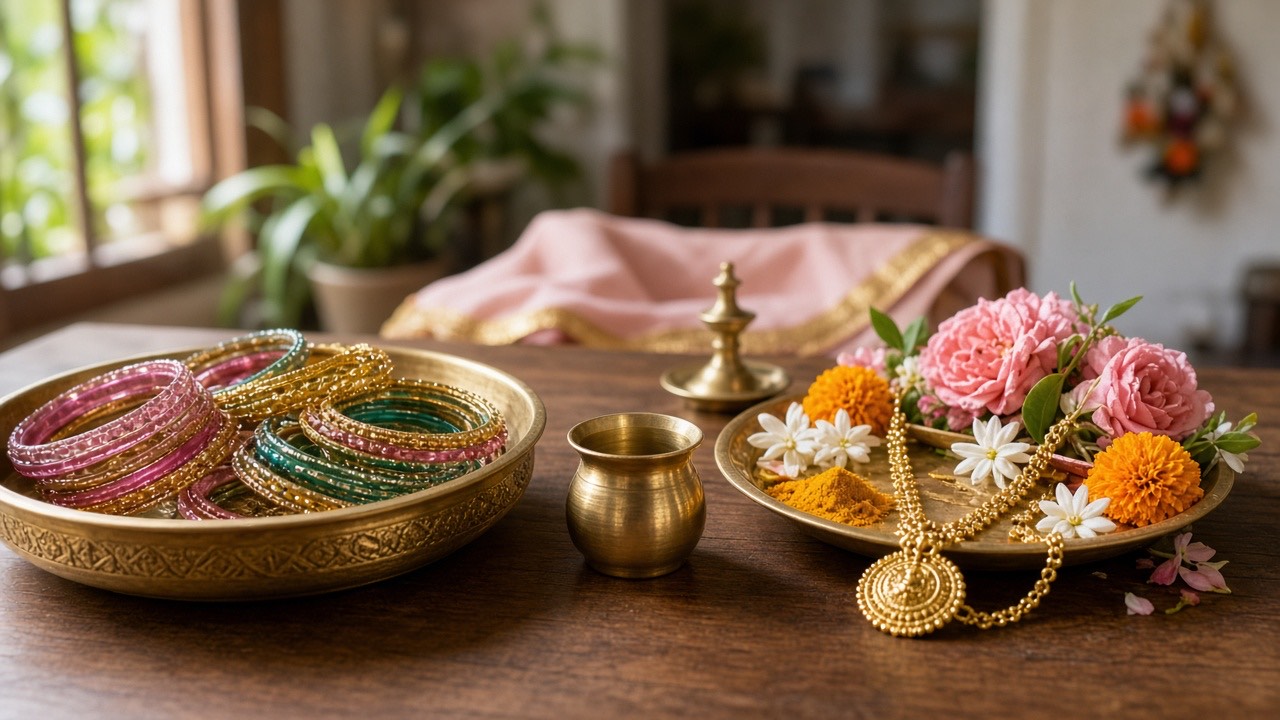
Valaikappu is closely associated with celebrating the mother-to-be, with bangles playing a visible role in many Tamil family traditions. Guests may see colourful glass or gold bangles as part of the blessing and adornment.
Beyond the bangles, the day can be a lively circle of women, relatives, and friends offering support, gifts, food, and music. Details still vary widely by household.
Decor, colour, and mood ideas for a Valaikappu-led day are covered in our Valaikappu themes and inspiration guide.
Same Day, Separate Days, or One Name?
There is no single answer. In some traditions Seemantham and Valaikappu feel like distinct ceremonies with different purposes. In others they share a date, a venue, or a combined guest list. Some families simply call the whole occasion their traditional baby shower.
Geography, language, and religious practice all shape the plan. A conversation with parents or grandparents usually helps more than copying a generic checklist online.
What the Celebrations Share
Both commonly centre the expectant mother, family blessings, and joyful anticipation. Relatives may gather at a temple, home, hall, or modern venue. Guests may join by video from India while the event unfolds in the United States, Canada, Europe, Singapore, Australia, or elsewhere.
Traditional food can sit beside a contemporary dessert table. None of those choices automatically make the day more or less meaningful.
Choosing Words Guests Will Recognise
When relatives come from different backgrounds, the invitation does quiet educational work. It tells people what your family calls the occasion and what to expect.
If Seemantham is the name that fits, culturally drawn seemantham invitations can introduce the celebration in familiar language while listing timing, venue, attire, and RSVP details.
When Valaikappu is the heart of the day, valaikappu invitations can reflect that through wording and visual cues guests already associate with the blessing.
If you celebrate both together, naming both on the card is often clearer than forcing a single label.
Keeping the Tradition Personal
Modern celebrations work best when families protect a few meaningful customs instead of trying to include every possible element. Ask elders which moments matter most. Ask the mother-to-be what will make her feel comfortable. Build around those priorities.
Digital personalisation and RSVP tools can ease logistics without changing the cultural heart of the gathering. The family still gives the day its meaning.
Seemantham and Valaikappu endure because families keep finding them useful — to bless, support, and celebrate a mother-to-be in language their own relatives understand.
Ready to choose wording guests will recognise? Browse Seemantham Invitations and start with a design that fits how your family names the day.
Frequently Asked Questions
Are Seemantham and Valaikappu always celebrated together?
No. Some families observe them separately, some combine them, and others primarily use one tradition or term. Practice varies by family and community.
Why are bangles important in Valaikappu?
Bangles are a recognisable part of many Valaikappu traditions and are used to celebrate and adorn the mother-to-be. Their exact role can differ across families.
Is Sreemantham different from Seemantham?
Sreemantham is a common English spelling variation of Seemantham. Families may prefer one form based on language, pronunciation, or habit.
Which name should appear on the invitation?
Use the terminology your family uses and your guests will recognise. If both traditions are part of the event, naming both is often the clearest choice.