
For a child, Upanayanam may begin with new clothes, arriving relatives, and a day that feels unlike ordinary school weeks. For parents and grandparents, the same hours can carry generations of meaning — learning, spiritual responsibility, and a rite that connects the family to a continuing tradition.
If you are planning an Upanayanam or attending one for the first time, you may wonder what actually happens. There is no universal script. Ritual order, length, and emphasis shift with Vedic tradition, region, community, and the guidance of your priest. This guide sketches the broad journey so guests and hosts share a common picture — not a rigid checklist.
What Upanayanam Points Toward
Upanayanam is a Hindu rite of passage traditionally linked with initiation into a path of learning and disciplined study. In English it is often called the Sacred Thread Ceremony or Thread Ceremony. Receiving the thread matters, but the deeper idea is responsibility, guidance, and belonging to a living tradition.
Explaining that “why” to the child in simple language before the day can turn participation from following instructions into sharing a family story.
For the practical host sequence — date, priest, venue, guest list — see our Upanayanam planning checklist.
Preparing Before Guests Arrive
Preparation often starts well ahead of the ceremony: coordinating with a priest, confirming venue and timing, arranging clothing and materials, and sending a clear schedule to relatives. Some celebrations stay intimate; others gather a wide extended family.
Emotional preparation matters too. Introduce unfamiliar words early, leave room for questions, and reassure the child that they do not need to master every detail — only to feel included in what the family is honouring.
Teachers, Parents, and Elders
Guidance sits at the centre. Depending on tradition, a priest, guru, father, or designated elder may lead key moments. Parents and relatives participate through blessings, support, and household customs.
For guests, noticing those relationships helps the ceremony make sense. Upanayanam places the child inside a chain of teachers, parents, elders, and generations — not only at the centre of a party.
The Sacred Thread
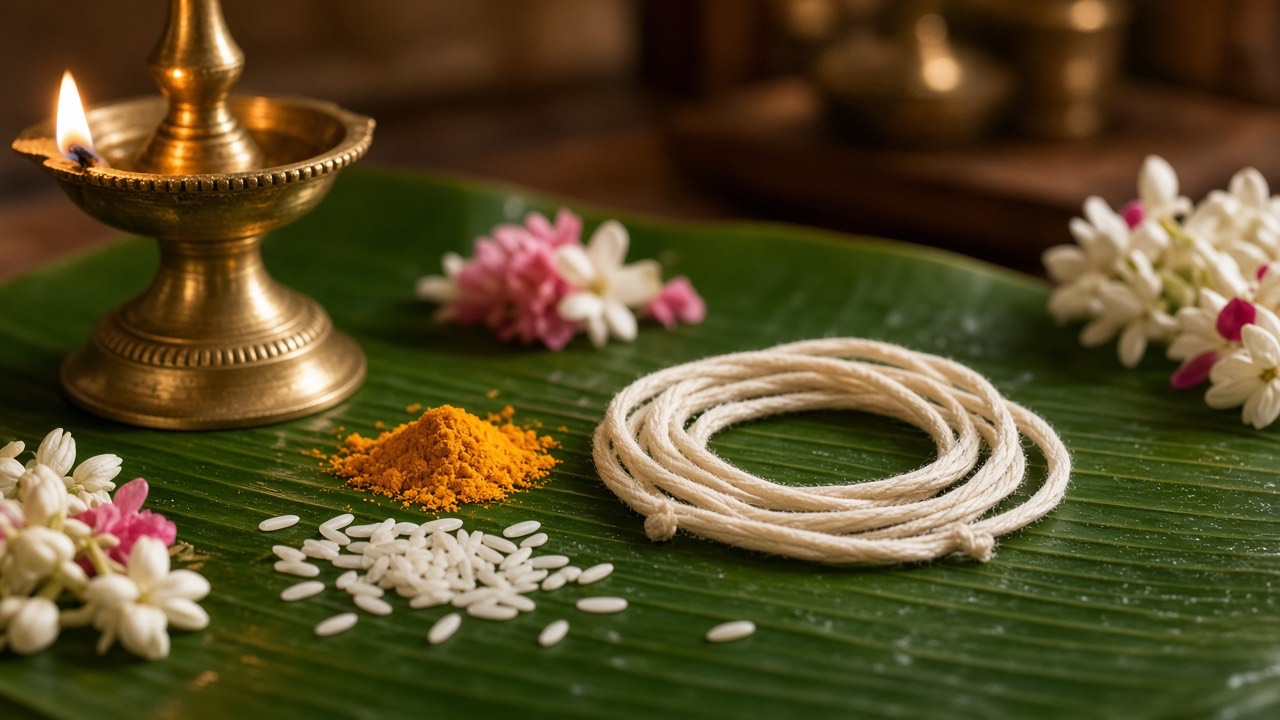
One of the most recognisable moments is the investiture of the sacred thread — often called the yajnopavita, or poonal in some South Indian traditions. Symbolism is explained differently across religious lineages.
First-time guests benefit from seeing the thread as a sign of ongoing commitment to learning and practice, not as decoration. Families usually continue teaching related responsibilities after the event itself.
Learning and the Gayatri Mantra
In many traditions, initiation into the Gayatri Mantra is a central, carefully held portion of the day. It may involve privacy or specific conventions. Follow the family’s guidance about photography, proximity, and when to remain quiet.
That moment is also a reminder: Upanayanam is a beginning of practices expected to continue, not only a single celebration afternoon.
Blessings, Photographs, and the Meal
After major ritual moments, families often share blessings, photographs, gifts, and a meal — where spiritual significance and ordinary joy meet. Grandparents’ stories about earlier ceremonies can help the child feel the day belongs to a longer family history.
When you are ready to connect invitation, sharing, and replies, our guide from Thread Ceremony invitation to RSVP covers that host workflow.
Helping Guests Arrive Prepared
A first-time guest may not know how long the rites will last or which portions are private. Clear communication beforehand makes the day more welcoming.
Thoughtful Thread Ceremony invitations can carry essential details while signalling the significance of the milestone. Families who want guests to recognise the Sanskrit name can explore Upanayanam invitations and personalise schedule, venue, and RSVP wording for their own celebration.
If You Are Attending for the First Time
You do not need detailed ritual knowledge. Arrive on time when the invitation marks an important start, dress for the venue and family expectations, keep phones quiet, and follow photography guidance. During ritual portions, observe respectfully and let close family participate as directed.
Save curious questions for afterward rather than interrupting a sacred moment.
Upanayanam is memorable for the ceremony, but its meaning points forward — a child with new responsibilities to learn, and a family ready to help that understanding grow.
Ready to give guests clear context? Browse Thread Ceremony Invitations and begin with a design that fits your family’s celebration.
Frequently Asked Questions
Is Upanayanam the same as a Thread Ceremony?
Thread Ceremony and Sacred Thread Ceremony are common English descriptions for Upanayanam. Families may also use regional or community-specific names such as Yagnopavitham, Janeu, or Janoi.
How long does the ceremony take?
There is no universal duration. Timing depends on tradition, ritual format, the priest, and whether related celebrations are included. Follow the schedule the hosts provide.
Can guests take photographs?
Expectations vary. Some portions may be fine to photograph; others may be private or sacred. Follow the family’s or priest’s guidance.
What should a guest wear?
Traditional Indian attire is common, though expectations depend on family and venue. If the invitation does not specify attire, ask the host when unsure.