
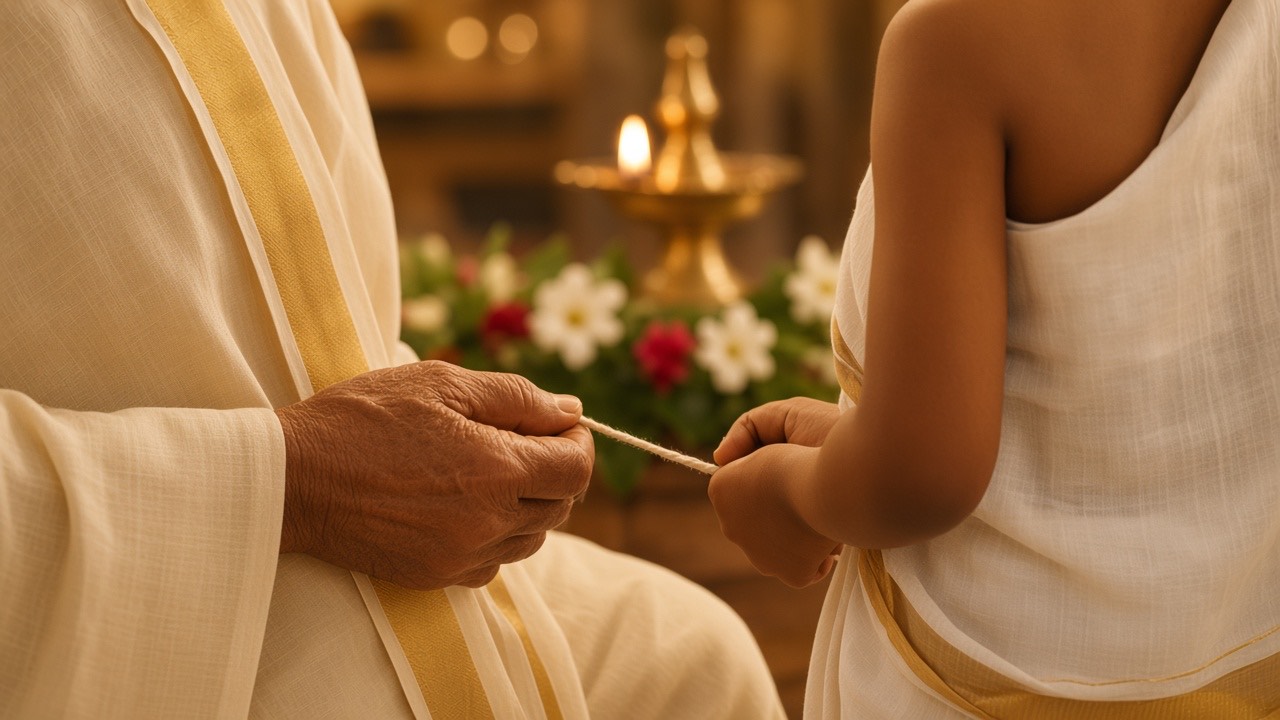
A child may see an upcoming Upanayanam differently from every adult in the room. Parents see generations of tradition. Grandparents remember ceremonies from decades ago. The child may be wondering why so many relatives are coming, what he is supposed to do, and why any of it matters.
Those questions are not interruptions. They are the opening.
Upanayanam is a Hindu rite of passage within particular traditions and communities, commonly linked with initiation into spiritual learning and the sacred thread. Ritual detail and terminology vary. Whatever form your family observes, the milestone becomes more personal when it is treated as a learning journey — conversations before the gathering, guidance during it, and reflection afterward — not only a date to complete.
For a guest-facing overview of typical moments, see what happens at an Upanayanam. This post focuses on helping the child understand and carry the meaning forward.
Begin With His Questions
Adults often start with history or ritual order. With a child, curiosity works better.
Ask what he already knows. What has he heard from grandparents or cousins? What excites or worries him? What does he think the sacred thread represents?
Short conversations across several weeks usually stick better than one long lecture the night before.
Connect the Ceremony to People He Knows
Tradition is easier to grasp through familiar faces. Share photographs from a parent’s, uncle’s, cousin’s, or grandparent’s ceremony if they exist. Ask an elder to recall not only the rites, but the nerves, humour, or joy of the day.
If practices have changed — a village home then, a temple or hall across an ocean now — say so. Children can understand that traditions travel and adapt while still carrying meaning.
Practical host planning once the conversations are underway is covered in our Upanayanam planning checklist.
Explain the Thread Beyond the Object
Children naturally focus on what they will wear. Gently shift from “What will I put on?” toward “What does this ask me to remember?”
Families should follow their own religious guidance for symbolism and responsibilities. At a child-friendly level, themes might include learning, discipline, respect, spiritual practice, or responsibility — whichever honestly reflects your tradition. The thread then feels less like costume and more like a reminder connected to everyday life.
Prepare Him for the Experience, Not Every Detail
Ceremonies can be long and unfamiliar. He does not need the full sequence memorised. It may be enough to know who will guide him, which moments matter most, when to sit quietly, and when family will join.
A brief introduction to the priest or elder beforehand, when possible, can lower anxiety and make meaning easier to notice.
During the Day, Keep Connection Light
From a child’s view the ceremony may move quickly. Small reassurances — a quiet reminder, a smile, a short word at a break — help more than quizzes about what he “should” remember. Meaning arrives gradually.
Help Guests Arrive With Context Too
Friends, classmates, or relatives from different backgrounds may need a simple frame for the day. The invitation can do more than list a date; it can signal a rite of passage.
Clear Thread Ceremony invitations give guests essentials in accessible language. Families who want the Sanskrit naming front and centre can personalise Upanayanam invitations with the child’s name, schedule, venue, and RSVP details.
The Most Important Talk May Come Afterward
When photographs are done and relatives have left, ask what he remembers most. Was anything different than he expected? Does he have new questions?
If your tradition includes ongoing learning, prayer, or responsibilities after Upanayanam, connect those practices back to what he lived that day. A small annual habit — looking at photographs together, recalling a grandparent’s blessing, talking about what the milestone means as he grows — keeps the thread tied to life, not only to an album.
Children do not preserve traditions only because adults organise ceremonies. Traditions become personal when children can ask, hear family stories, understand symbols, and see how a milestone touches their own lives.
Upanayanam may fill one day on the calendar. Its meaning is meant to reach beyond it.
Ready to introduce the milestone to family and friends? Browse Thread Ceremony Invitations and keep more attention on the conversations before and after the day itself.
Frequently Asked Questions
How should parents explain Upanayanam to a child?
Use simple language rooted in your family’s tradition. Frame it as a milestone involving learning, responsibility, spiritual practice, and family history — then invite questions instead of trying to cover everything at once.
When should we start preparing a child?
There is no fixed clock. Several short conversations in the weeks before the ceremony usually feel more natural than one dense explanation immediately beforehand.
What if the child is nervous?
Explain the broad flow, introduce the people who will guide him, welcome practical questions, and reassure him that he does not need to understand or remember every detail perfectly.
How can families keep the meaning alive afterward?
Continue age-appropriate conversations, connect ongoing practices to the ceremony’s themes, share family stories, involve elders, and revisit the milestone as the child grows — not only on the anniversary of the event.