
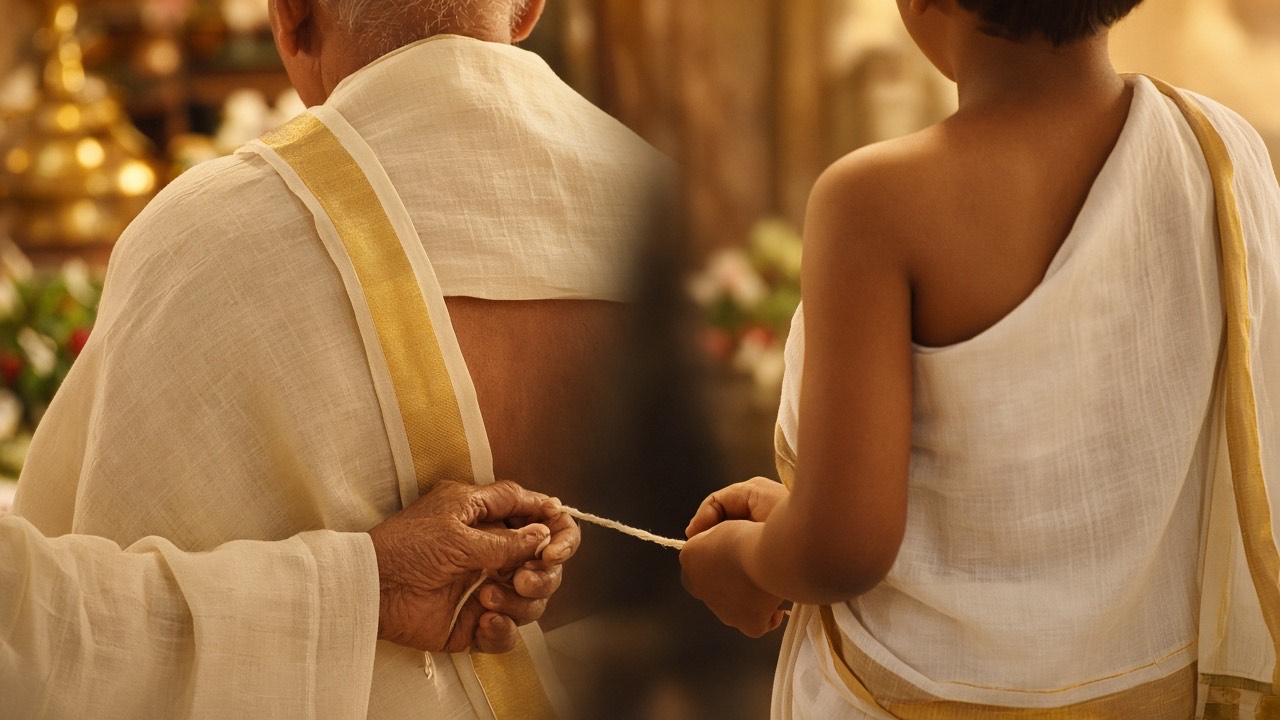
For many families, planning an Upanayanam brings a quiet question: how do we preserve a tradition passed down for generations while celebrating it in the world our children live in today?
For families far from their ancestral hometown — or thousands of miles from extended family — the question can feel sharper. Tradition has never depended only on geography. It continues because families teach it, practise it, explain it, and give the next generation a reason to value it.
Help Your Child Understand the Why
Children experience ceremonies differently from adults. Parents may see heritage and spiritual meaning. A child may first see special clothes, arriving relatives, photographs, instructions, and a long day.
Before the celebration, explain why the family is gathering. Upanayanam is a Hindu rite of passage tied to the beginning of a young person's spiritual and educational journey. Practices vary by family and community, so elders are often the best guides to what it means in your household.
A simple conversation can turn participation from something they have to do into something the family wants to share with them.
Let Grandparents Become Storytellers
Ask grandparents or older relatives about earlier Upanayanams. Who attended? What do they remember? What has changed, and what has stayed?
Those conversations turn tradition into a family story. If relatives live overseas, record their memories or arrange a video call beforehand so their voices still belong to the day.
Our Upanayanam planning checklist covers the practical foundation once the meaning is clear to everyone involved.
Make Communication Easier for Modern Families
Today's guest list may stretch across cities and countries. Clear communication matters when guests are unfamiliar with the ceremony or need to coordinate travel.
A Thread Ceremony invitation can establish the significance of the occasion while stating date, time, and venue clearly. Families who want a design they can adapt can explore Upanayanam invitation templates that pair cultural details with online personalisation.
Digital sharing does not make the tradition less traditional. It makes organising a geographically spread family easier. See how invitation and RSVP fit together when you are ready to manage replies in one place.
Help Guests Feel Included
Some guests have attended many Upanayanams. Others are experiencing one for the first time.
A short note about attire, approximate schedule, or which portions of the day are especially meaningful can help people participate respectfully — without turning the celebration into a lecture.
Preserve Something for the Future
Photographs capture how the day looked. Also preserve why it mattered.
Write a short note to your child about what the day means to your family. Record grandparents sharing a blessing. Save the invitation and program. Keep a small digital collection of photographs and family messages.
Years from now, those pieces can help them remember not only the ceremony, but the people who gathered around them — and perhaps guide them when it is another generation's turn.
Tradition Can Travel
Families move. Languages evolve. Technology changes. Celebrations adapt. Meaningful traditions continue.
An Upanayanam in Chicago, Toronto, London, Sydney, Singapore, or anywhere else can still carry the stories, blessings, and values your family shares. The goal is not to make every celebration look exactly like the one before it. It is to understand what matters — and carry that forward.